
$19 Cost Per Sale Facebook Ads for Pressure Washing (Not Cost Per Lead)
By Keven Bermeo · · 10 min read
My client has a $19 cost per sale. Not cost per lead, cost per sale. That means he spends $19 on Facebook ads and gets a paying customer. This is the metric that actually matters, and it's the metric most pressure washing businesses completely ignore. They obsess over cost per lead without tracking how many of those leads turn into revenue. Today I'm breaking down the exact metrics we use to identify winning ads and how LeadCatch tracks sales per campaign.
We use LeadCatch because it tracks the entire customer journey from Facebook ad to paid invoice. When someone fills out a Facebook lead form, they're automatically added to LeadCatch. When you send them an invoice and they pay, LeadCatch marks them as closed and attributes the sale to the specific campaign and ad that generated them. This is how you scale profitably instead of guessing.
Why Cost Per Sale Is the Only Metric That Matters
Let's say you're running Facebook ads and getting leads at $10 cost per lead. Sounds great, right? But if none of those leads convert into paying customers, you're just burning money. On the other hand, if you're paying $25 per lead but 50% of them convert into $400 jobs, you're printing money. Cost per lead is a vanity metric. Cost per sale tells you if your ads are actually profitable.
This client is spending $19 per sale. His average job is $300-$500. That means for every $19 he spends on Facebook ads, he's making $300-$500 in revenue. That's a 15-25x return on ad spend. Even if his profit margin is only 50%, he's making $150-$250 in profit for every $19 invested. This is why tracking cost per sale changes everything.
Most pressure washing businesses can't track cost per sale because they're not using a CRM that integrates with their Facebook ads. They're manually entering leads into spreadsheets or using CRMs that don't connect to their ad accounts. LeadCatch solves this by automatically syncing Facebook leads and tracking which campaigns generate revenue. If you're running ads without this data, you're flying blind.
How LeadCatch Tracks Sales Per Campaign
Here's how it works: when someone fills out your Facebook lead form, their information is instantly added to your LeadCatch CRM. You can see their name, contact info, and which campaign and ad they came from. When you send them a quote and they book the job, you create an invoice in LeadCatch. When they pay that invoice, LeadCatch automatically marks them as "closed" and attributes the sale to the original ad.
This gives you insanely valuable data. You can see exactly which campaigns are generating sales, not just leads. For this client, we can see that "Video Two, Ad Copy One" generated two sales. That means we're going to scale that ad: duplicate it, test new variations, and allocate more budget to it. Without this data, we'd be guessing which ads to scale based on cost per lead alone.
The invoicing feature in LeadCatch is also a game-changer for professionalism. You can create branded invoices with your logo, itemized services, and payment terms. Customers can pay online via credit card or ACH directly from the invoice. This speeds up payment and makes you look more professional than sending a text with your Venmo handle. Every detail matters when you're trying to scale past $10,000 per month.
The Facebook Ad Metrics You Should Actually Track
Beyond cost per sale, there are a few other metrics that predict ad performance. Click-through rate (CTR) tells you if your ad creative is compelling enough to get people to click. A good CTR for pressure washing ads is 2-4%. If your CTR is below 1%, your video or ad copy isn't resonating and needs to be reworked.
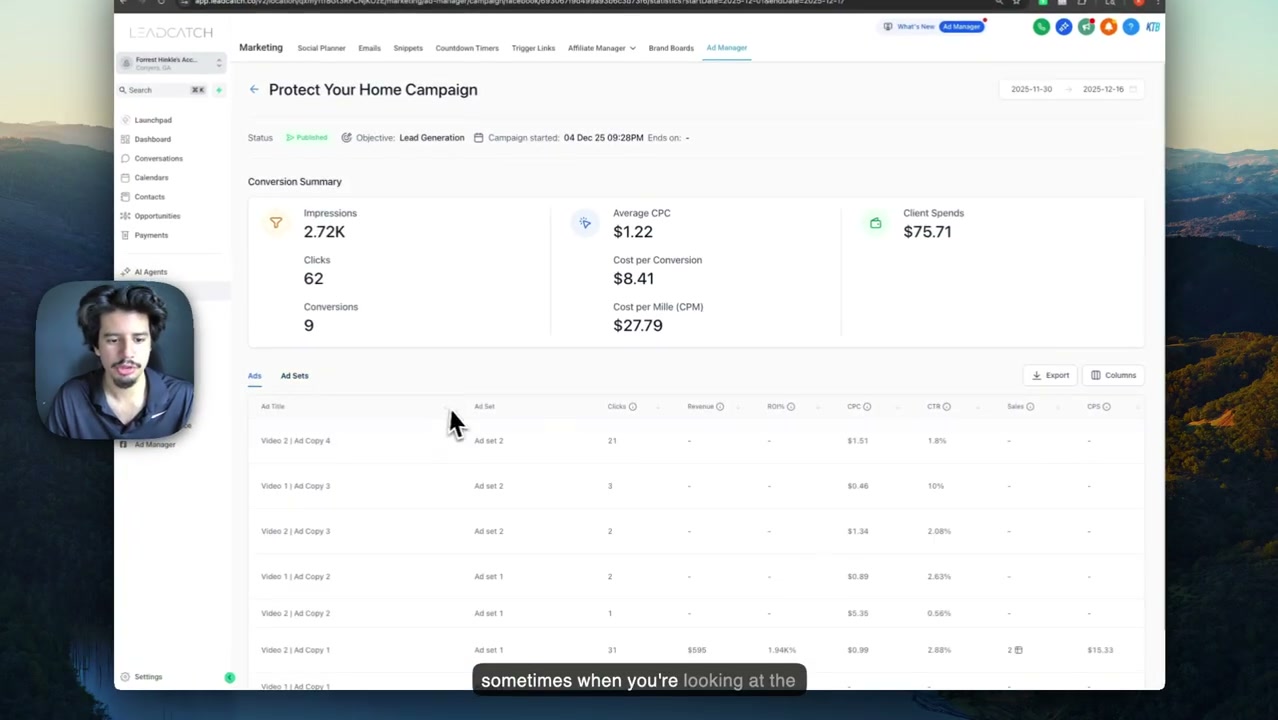
Cost per click (CPC) tells you how much you're paying for each person who clicks your ad. For pressure washing, a good CPC is $0.50-$2.00. If your CPC is higher, your targeting might be too narrow or your creative isn't engaging enough. Lower CPC means you're getting more clicks for your budget, which leads to more leads and ultimately more sales.
Cost per lead still matters. It's just not the only metric. A good cost per lead for pressure washing is $10-$25. But remember, a $10 cost per lead with a 10% close rate is worse than a $25 cost per lead with a 50% close rate. This is why you need to track the entire funnel from ad impression to paid invoice. LeadCatch gives you this visibility so you can optimize for revenue, not just leads.
Scaling the Ads That Generate Sales
Once you identify which ads are generating sales, you scale them aggressively. For this client, "Video Two, Ad Copy One" generated two sales, so we're duplicating that ad into new campaigns, testing it with different audiences, and increasing the budget. We're also creating new variations of that video with similar messaging to see if we can replicate the success.
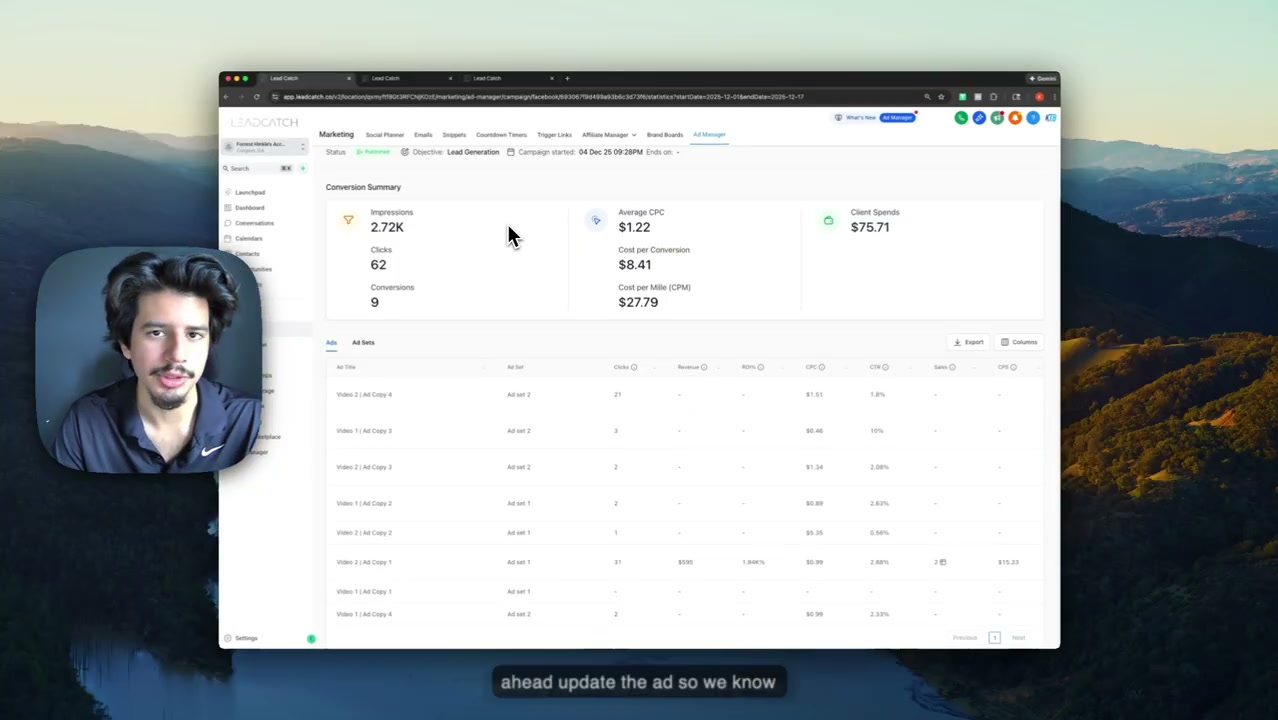
Scaling is about testing variations of what's already working, not just increasing budget. If a specific video is generating sales, we'll test different ad copy with that video. If a specific ad copy is working, we'll test different videos with that copy. This is how you go from $1,000/month in ad spend to $5,000/month without tanking your cost per sale.
The mistake most businesses make is scaling too fast. They see one winning ad and immediately 10x the budget. Then the cost per lead skyrockets and they panic. The right way to scale is gradually: increase your budget by 20-30% every 3-5 days as long as your cost per sale stays profitable. LeadCatch clients who follow this approach consistently scale from $30/day to $100+/day within 60 days while maintaining profitability.
Why Most Pressure Washing Businesses Can't Track Cost Per Sale
The reason most pressure washing businesses don't track cost per sale is because their systems aren't connected. They run Facebook ads, leads come in via text or email, they manually enter them into a spreadsheet or basic CRM, and they have no idea which ad generated which sale. By the time they close a job, they've forgotten where the lead came from.

This is why integration matters. LeadCatch automatically syncs Facebook leads, tracks them through your pipeline, and attributes sales to the original ad. You don't have to manually tag leads or remember which campaign they came from. The system does it for you. This is the difference between running ads as a hobby and running ads as a scalable marketing system.
If you're running Facebook ads right now and you can't tell me your cost per sale for each campaign, you're leaving money on the table. You might be scaling ads that generate leads but no sales. You might be pausing ads that have a high cost per lead but a great cost per sale. Without the data, you're making decisions based on gut feel instead of facts. That's not how you build a six-figure pressure washing business.
Real Results: $19 Cost Per Sale Breakdown
Let's look at the actual numbers for this client. He's generated multiple sales through Facebook ads, with the best-performing ad achieving a $19 cost per sale. His average invoice is around $350, which means he's making $331 in gross revenue for every $19 spent on ads. Even after accounting for labor, materials, and overhead, he's profiting $150-$200 per sale.
The front-end sales alone show $650 from one campaign and $250 from another, nearly $900 in revenue from $300 in ad spend. That's a $600 profit on the front end. But here's the kicker: he's got 20+ leads in his pipeline who haven't converted yet. These leads will convert over the next few weeks with proper follow-up, which LeadCatch automates. The true ROI is even higher than the initial numbers suggest.
This is why we emphasize long-term lead value at pressurewashingplays.com. A lead who doesn't book today might book next month or refer you to a neighbor. If you're only measuring immediate conversions, you're undervaluing your ads. LeadCatch keeps all your leads in one system so you can nurture them over time with automated follow-up, turning cold leads into future sales.
How LeadCatch Helps You Track Cost Per Sale
LeadCatch is the only CRM built specifically for home service businesses that integrates Facebook Lead Ads, tracks sales per campaign, and automates follow-up. When you run ads through LeadCatch, every lead is automatically imported, followed up with via text and email, and tracked through your entire sales pipeline. When you send an invoice and get paid, the sale is attributed to the ad that generated it.

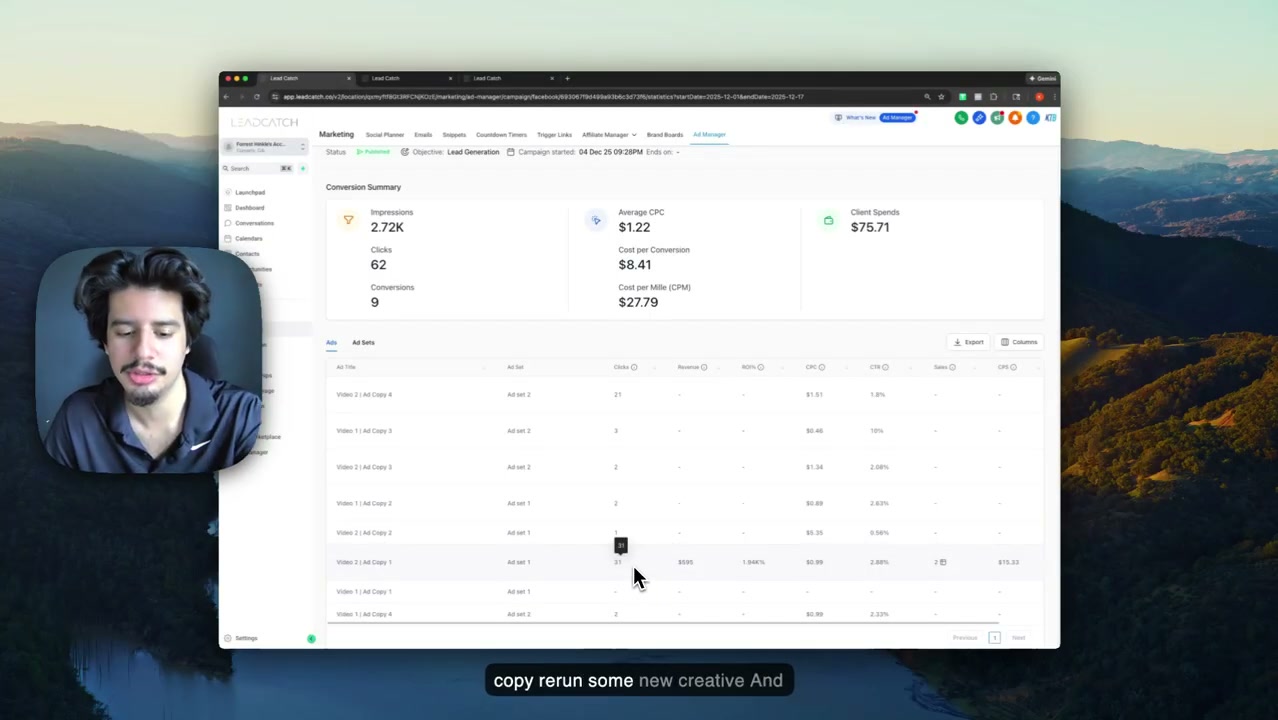
This data is gold. It tells you exactly which campaigns to scale, which ads to pause, and where to invest your budget for maximum ROI. Instead of guessing, you're making decisions based on actual revenue. If you're serious about scaling your pressure washing business with Facebook ads, you need a system that tracks cost per sale, not just cost per lead. The LeadCatch app is included with every LeadCatch plan; see pricing or Ads Management.
Related Articles
$300 in Facebook Ads = 25 Pressure Washing Leads: Why You Should Start NOW
Getting tons of Facebook leads but they
88 Facebook Leads at $10 Each: Real Campaign Results Breakdown for Pressure Washing
See inside a profitable Facebook ad campaign: 88 leads at $10 each, $2,500 in sales generated, split
Step-by-Step: Building a Facebook Ad Campaign That Gets 6 Leads at $12 CPL
Stop thinking small. Learn the risk-taking mindset, research strategies using Facebook Ads Library,
Frequently asked questions
What is cost per sale vs cost per lead for Facebook ads?
Cost per lead measures how much you spend to get contact information. Cost per sale measures how much you spend to get a paying customer. A $15 cost per lead means nothing if none of those leads convert. A $19 cost per sale means you spend $19 to acquire a customer who pays you $200-$500.
How do you track cost per sale for Facebook ads?
You need a CRM that integrates with Facebook Lead Ads and tracks revenue per lead. LeadCatch syncs Facebook leads automatically and allows you to mark leads as "closed" when they pay an invoice. This shows exactly which campaigns and ads generate actual sales, not just leads.
What Facebook ad metrics should I track for pressure washing?
Track cost per lead, click-through rate, cost per click, and most importantly, cost per sale. Cost per sale is the only metric that matters for profitability. You also want to track which specific ads (video + ad copy combinations) generate sales so you can scale winners.
How does LeadCatch track sales from Facebook ads?
LeadCatch integrates with Facebook Lead Ads to automatically import leads into your CRM. When you send an invoice through LeadCatch and the customer pays, the lead is marked as "closed" and attributed to the specific campaign and ad that generated them. This gives you true ROI data.
What is a good cost per sale for pressure washing Facebook ads?
A good cost per sale for pressure washing is $15-$30. If your average job is $300-$500, a $19 cost per sale gives you 10-25x return on ad spend. Anything under $50 cost per sale is profitable for most pressure washing businesses.
Can I send invoices through LeadCatch CRM?
Yes, LeadCatch allows you to create and send professional invoices directly from the platform. Customers can pay online via credit card or ACH. When an invoice is paid, the lead is automatically marked as closed and attributed to the marketing source that generated them.
Keep reading
Case Studies
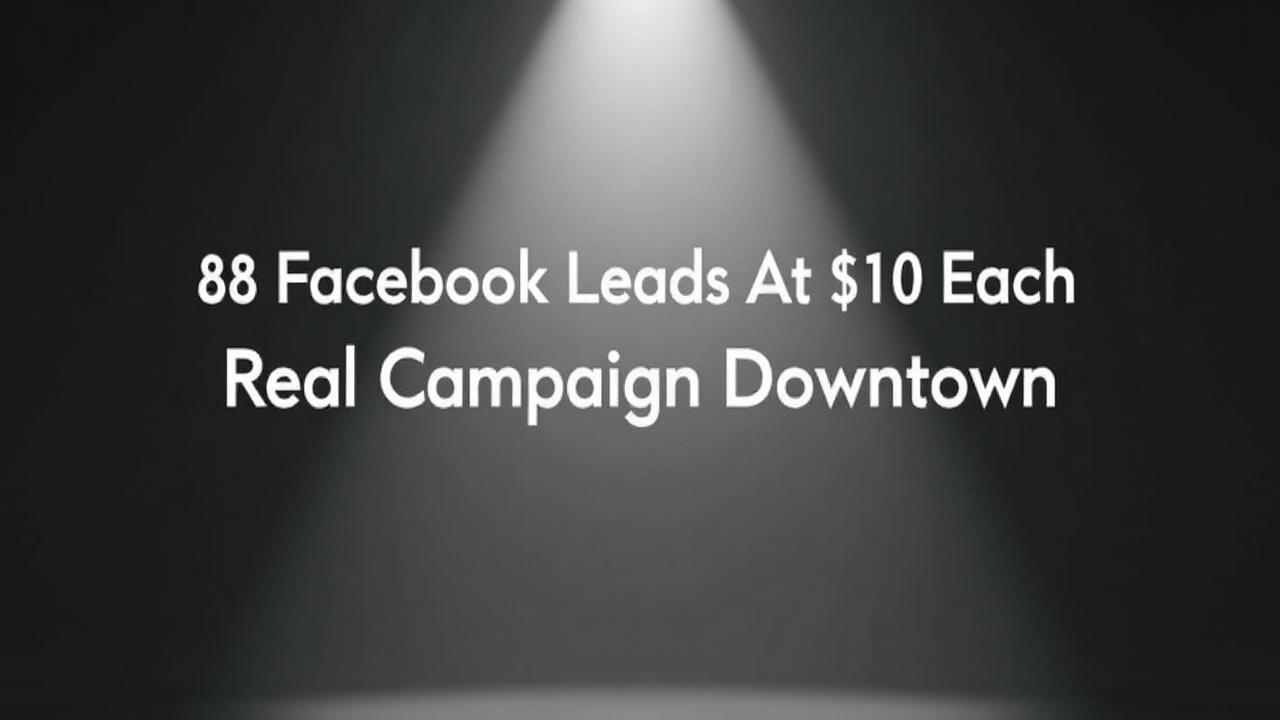
88 Facebook Leads at $10 Each: Real Campaign Results Breakdown for Pressure Washing
See inside a profitable Facebook ad campaign: 88 leads at $10 each, $2,500 in sales generated, split testing strategy, and why consistency matters more than perfection.
· 14 min read
Case Studies
How We Generated 123 Leads in 30 Days with Facebook Ads for Pressure Washing
Behind-the-scenes look at two profitable Facebook ad campaigns generating 123 leads in 30 days at $10-14 per lead. See the exact setup, targeting, ad creative, and results.
· 15 min read
Case Studies
What $6,000 in Ad Spend Gets You: 300 Leads & $40K+ in Sales (Real Campaign Breakdown)
See the exact results of a $6,000 Facebook ad campaign that generated 300 leads at $23 CPL, nearly 200,000 views, and over $40,000 in closed sales.
· 8 min read